
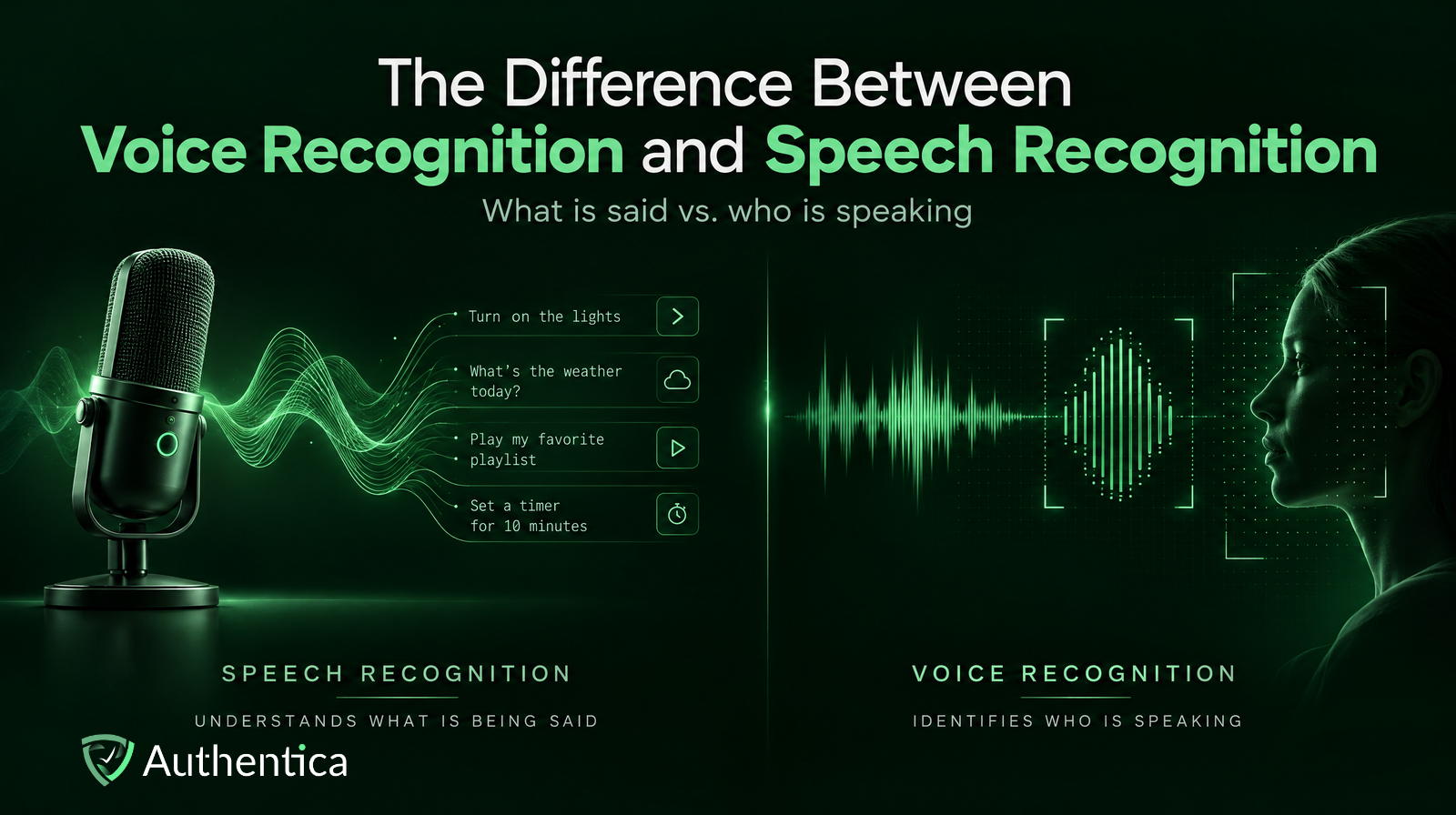
For some people, voice recognition and speech recognition are often treated as two names for the same technology. Both involve a device listening to a person, processing audio, and producing a response.
However, they are in reality two different technologies that answer two different needs. Speech recognition identifies what is being said. Voice recognition identifies or verifies who is speaking.
This difference may seem small, but it changes how each technology works and where it is used. The speech recognition technology is used to turn spoken voice into written text or commands, while voice recognition is used to verify a person’s identity or personalise a digital experience.
What Is Speech Recognition?
Speech recognition is a technology that allows a computer to recognize spoken words and convert them into text that can be processed as commands or actions. It is also known as Automatic Speech Recognition or ASR.
The system is mainly concerned with understanding what is being said accurately and it does not necessarily need to determine who is speaking. The system listens to audio, compares it with language patterns, and determines the most likely words and sentences that are being said.
When you dictate a message, generate automatic captions, search online using your voice, or ask ChatGPT, speech recognition is the technology involved. It processes what you say and translates it into something a computer can understand.
Speech recognition begins when a microphone captures a person’s voice and converts it into a digital signal. The system separates the audio into smaller sound units, then compares them with known speech patterns and language models.
What Is Voice Recognition?
Voice recognition focuses on identifying or verifying the person who is speaking. It analyses the unique characteristics of a voice rather than the meaning of the spoken words.
Every person has distinct vocal features, including pitch, tone, rhythm, pronunciation and speaking speed. A voice recognition system uses these features to create a digital profile unique to each user, often called a voiceprint.
The technology compares a new voice sample with the stored profile. If the characteristics match closely enough, the system may confirm the speaker’s identity, unlock an account, confirm a transaction or provide a personalized response. So Authentica offer voice verification.
Common Uses of Speech Recognition
Speech recognition is widely used in transcription, note-taking and voice commands. For note taking, it can convert meetings, interviews, lectures, voicemails and personal thoughts into searchable written content.
For voice commands, it works with tools such as Siri and ChatGPT to convert spoken requests into text and help process or respond to them in real time.
It is also an important accessibility tool. People who cannot type easily can use speech-to-text to write messages or control a computer. Features like automatic captions can make videos and live events more accessible.
Virtual assistants, vehicle systems and customer service platforms can also rely on this technology heavily for different features.
Common Uses of Voice Recognition
Voice recognition can be used for authentication and personalisation, with authentication being an important use case. Banks and fintech service providers may use voice recognition to verify customers during phone calls, reducing the need for repeated security questions.
For personalization, smart devices can distinguish between household members and provide personal calendar updates, playlists, reminders or account information.
Which Technology Do You Need?
The two technologies have different uses, and you may need one of them or both depending on the application. Speech recognition is commonly used for transcription, captioning, accessibility features and voice commands, while voice recognition can be used for authentication, speaker identification and personalisation.
Final Thoughts
Speech recognition and voice recognition are closely related, but they are not interchangeable. Speech recognition focuses on what a person says, while voice recognition focuses on identifying or verifying who is speaking.