
Offer Ends In
00
:
00
:
00
:
00
One-time passwords (OTPs) provide a reliable method for verifying user identities while logging in into their accounts or performing a transaction. Traditionally, OTP codes were delivered through SMS or email, but currently, there are methods that offer better usability and security like OTP delivery via Whatsapp.
In this guide, we explore what WhatsApp OTP authentication is and the most important tips and best practices for implementing it effectively into your platform or app.
A WhatsApp OTP is a temporary verification code sent to the user through a WhatsApp message to confirm their identity when accessing their account or completing a sensitive transaction. Similar to other OTP methods, the unique code is generated by the backend authentication system and remains valid for a short period of time before expiring to prevent interception or hacking of any type.
Because WhatsApp messages are delivered through an encrypted messaging app and through a familiar app that is widely used, this authentication method offers both strong security and a smooth user experience.
The following best practices can help organizations implement and maintain a secure and effective WhatsApp OTP authentication system.
Using a verified WhatsApp Business account is one of the most important steps when sending authentication messages. Verification confirms the identity of the business behind the message and ensures that users can easily recognize the sender and be less prone to hacks.
When users see a recognizable business name rather than an unknown number, they are far more likely to trust the message and know when to never trust it. This significantly reduces confusion and prevents users from mistaking legitimate OTP messages for spam or phishing attempts.
The security of your WhatsApp OTP implementation still depends heavily on how verification codes are generated and managed. OTPs should always be created using secure algorithms that fully randomize them to ensure that thy cannot be predicted or reproduced by attackers.
It is also important to set strict expiration rules where OTPs only remain valid for a limited period, typically between 30 seconds and a few minutes. Short expiration times reduce the risk that intercepted codes could be reused later or the attacker has time for interception.
Although WhatsApp provides strong delivery reliability, it should not always be the only available authentication channel as this isn't generally considered a best practice.
A user can suffer from network connectivity issues, or is for any reason using a device that doesn't support WhatsApp, and there must be another authentication method in this case. SMS or email authentication can be good choices as fallback options that are made available to users.
OTP messages delivered by any method should remain focused and concise. The primary purpose of the message is to deliver a verification code quickly so the user can complete the authentication process without confusion.
Making the message puzzling or not properly formatted or with unneeded details can lead to a worse experience for users. You should also make the code easy to copy with no issues.
WhatsApp OTP Solutions by Authentica
Authentica offers WhatsApp OTP authentication that is pre-built and ready to integrate via the Authentica API. You can learn more about how Authentica guarantees smooth integration and secure WhatsApp OTPs by requesting a free consultation with our experts.
Using WhatsApp for delivering OTPs is a great alternative to traditional OTP verification channels like SMS and email. By delivering the security codes through a familiar messaging platform, businesses can combine strong security controls with a convenient user experience, but only when the implementation is careful and the right considerations are taken.
WhatsApp OTP is a method of authenticating a user by sending a one-time password through WhatsApp instead of a traditional SMS. The code, which is temporary like any one time password, expires within a predefined time window, and is used to confirm actions like logging in, creating an account, resetting a password or approving a transaction.
From the user’s perspective, the experience is simple: a short code arrives in a familiar app (WhatsApp) via a chat and is used immediately to complete the action.
What makes WhatsApp OTP different is not the concept of one-time passwords itself, but the delivery channel. Rather than relying on telecom networks, the verification message is sent through the WhatsApp Business Platform using official APIs. This places the OTP inside an encrypted WhatsApp conversation, typically sent from a verified business profile.
As a result, users can clearly recognize the sender and trust the authenticity of the message they receive.
Benefits of WhatsApp OTP
One of the most important advantages of WhatsApp OTP is the security of WhatsApp itself, making it a perfect platform for sending security focused messages like OTPs. WhatsApp uses end-to-end encryption, meaning the OTP can only be read by the sender and the intended recipient.
Unlike SMS, which passes through multiple telecom systems, meaning that they can be intercepted, WhatsApp messages are protected from interception during transmission with this end-to-end encryption.
Faster and More Reliable Delivery
WhatsApp OTP messages are typically delivered instantly, without the delays that regularly happen SMS. Businesses can also track delivery and read status through the WhatsApp Business Platform, ensuring that OTPs reach users promptly and reducing failed authentication attempts that aren't tracked clearly and caused by late or missing messages.
Because WhatsApp is already a daily communication tool for billions of users around the world, receiving an OTP through the app feels natural and seamless for them. Users do not need to switch between apps, search inboxes, or open the SMS app that is not as widely used as WhatsApp nowadays.
All authentication messages also remain in a single chat thread, making them easy to find and less distracting. On supported devices, features such as automatic OTP detection further reduce manual input, streamlining the entire verification process.
WhatsApp operates in over 180 countries and is not tied to local mobile operators. This makes WhatsApp OTP especially effective for global platforms and international users. Whether a user is traveling or living in a region with unreliable SMS infrastructure, OTP delivery remains consistent as long as there is an internet connection.
Better Cost Efficiency
Sending OTPs via WhatsApp is often more cost-effective than SMS, especially for businesses handling high verification volumes. Messages are delivered over the internet rather than telecom networks, reducing per-message costs, which are limited only to the Whatsapp Business API per message fees, which are comparably much lower than SMS messages.
This makes WhatsApp OTP a practical option for scaling authentication without significantly increasing operational expenses.
WhatsApp OTP is built to support high volumes of authentication requests. Using predefined templates, automated workflows, and API-based integrations, businesses can scale verification processes smoothly with no limitations as their user base grows to millions or hundreds of millions of users.
OTP messages sent through WhatsApp come from branded, verified business profiles that display the official business name and logo. Over time, this builds familiarity and trust, reassuring users that verification requests are legitimate and letting them know where to trust OTP messages.
WhatsApp OTP Solutions by Authentica
Authentica offers WhatsApp OTP authentication that is pre-built and ready to integrate via the Authentica API. You can learn more about how Authentica guarantees smooth integration and secure WhatsApp OTPs by requesting a free consultation with our experts.
WhatsApp OTP is the evolution of one-time password authentication, utilizing one of the most widely used apps to bring more than just security, but also an enhanced user experience, cost optimization and d other benefits that most businesses should consider.
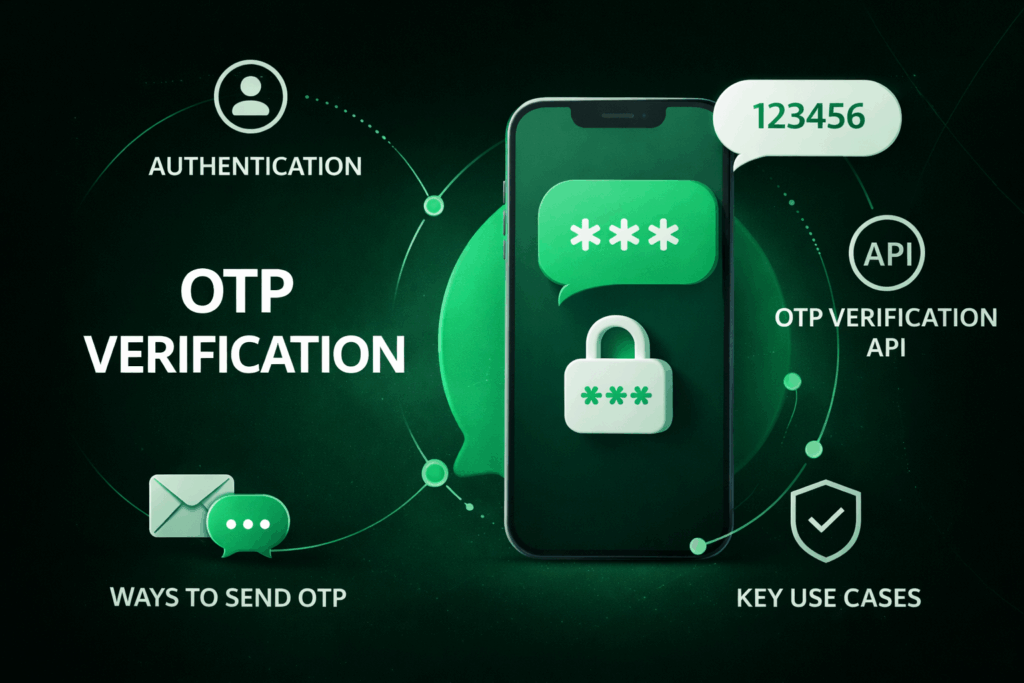
The usage of Whatsapp for OTP messages instead of SMSs is on the rise, with more businesses adopting WhatsApp OTP for verification with each new year. This is due to the enhanced security and faster delivery it provides, as well as the enhanced user experience that is achieved by making authentication more reliable.
WhatsApp OTP also ensures enhanced focus on encrypted communication and compliance. With this, cost reductions can be easily achieved. If you are considering WhatsApp OTP for your platform or not sure about its value, here are the key aspects you need to know.
A WhatsApp OTP is a time-sensitive verification code sent to a user in their WhatsApp chats. The primary objective is to confirm identity, authorize a login, reset a password or approve a transaction.
The WhatsApp OTP process typically involves generating a unique code by your backend system that is connected to Whatsapp Business API, and delivering it through WhatsApp's encrypted messaging app. This helps businesses verify users better more securely than with SMSs and reduce authentication delays.
The process of sending a WhatsApp OTP follows a clear, standardized flow designed for speed and security.
User Action Triggers Verification
A user begins an action such as signing in, creating an account, confirming a payment, or resetting a password. This prompts your system to request authentication.
Backend System Generates the OTP
Your authentication system creates a unique, time-bound code, usually valid for 30 seconds to a few minutes. Short validity helps reduce the risk of unauthorized reuse.
The OTP is Sent Through WhatsApp Business API
The OTP is placed inside an approved WhatsApp message template (templates are approved by meta to make sending messages from business to users stricter). Because WhatsApp enforces template approval, the format stays consistent, clear and compliant with regulations.
User Enters the OTP
The user opens their WhatsApp chat (by clicking the notification they receive), retrieves the code, and enters it into your app or site to complete verification. This process is familiar and straightforward for users.
OTP Expires Automatically
Once the time limit expires, the code becomes invalid and a new one must be requested if authentication is done already. This prevents misuse if a message is delayed or intercepted.
Through this practice, WhatsApp provides visibility through read receipts, strong encryption for secure delivery of the OTP message, and a familiar interface that users are used to.
Setting up WhatsApp OTP delivery requires several components that are set up at once. Here is what you need to setup:
A Verified WhatsApp Business Account (WABA)
Businesses must sign up for and verify a WhatsApp Business Account. Verification confirms your identity and activates your account, which means WhatsApp will display your business name to users and unlock higher messaging volumes. Still, at this point, you can’t use WhatsApp to send OTPs.
Access to the WhatsApp Business API
WhatsApp OTPs can only be delivered through the WhatsApp Business API, not the standard WhatsApp app. The API connects a system you use, whether it is your CRM or a dedicated WhatsApp tool, with WhatsApp's messaging infrastructure and allows automated, large-scale OTP delivery. Many companies obtain access to this API through official solution providers that handle onboarding, technical setup, and compliance requirements.
Pre-Approved OTP Message Templates
All WhatsApp messages must use templates approved by WhatsApp. For OTP messages, templates must show consistent formatting, clear placement for the dynamic OTP value and no promotional content. This prevents template message rejection and maintains a reliable delivery experience.
User Opt-In
WhatsApp requires explicit opt-in from users before you send an OTP message, or any other type of messages. Opt-ins can be collected during sign-up, checkout, or any onboarding step. Without clear consent from users, WhatsApp may restrict your account.
Secure OTP Generation and Validation
Your system must have the capability to generate time-sensitive codes, store them securely, validate them when entered and invalidate them once used or expired. This part of the process integrates directly with WhatsApp's delivery channel.
WhatsApp OTPs offer several advantages compared to other ways to send OTPs. Here are the most important benefits:
Faster Delivery and Enhanced Visibility
WhatsApp notifications typically appear instantly, and users are also used to opening the app quickly during daily communication. This reduces delays and increases the likelihood that users submit OTPs on time, improving overall verification from the first code success rates.
Stronger Security
WhatsApp protects messages with end-to-end encryption. The OTP is encrypted from the moment it leaves your system until the user reads it, making WhatsApp a more secure choice for sensitive verification compared to SMS and email.
Lower Costs in Certain Countries
In markets where SMS is relatively expensive or unreliable, WhatsApp OTP delivery can reduce verification costs. This helps businesses save money on authentication operations.
Verified Business Identity
Users instantly see who the OTP is coming from. Your business name and profile photo appear at the top of the chat, building trust and reducing the chance of phishing or spoofing.
More Reliable Delivery in Global Markets
WhatsApp bypasses issues such as SMS carrier outages, inconsistent international delivery or blocked messages. As long as the user has internet access, messages arrive reliably.
Better User Experience
WhatsApp is interactive, familiar, and widely used. Because users are already active in the app, verification feels effortless when done via WhatsApp.
Authentica offers WhatsApp OTP authentication that is pre-built and ready to integrate via the Authentica API. You can learn more about how Authentica guarantees smooth integration and secure WhatsApp OTPs by requesting a free consultation with our experts.
WhatsApp OTP plays a vital role in ensuring secure user verification and preventing unauthorized access. By combining encrypted delivery, global reach, and verified business identities, it improves both security and the user experience.
While SMS and email still play important roles as fallback options, WhatsApp is becoming the preferred channel for organizations seeking reliable, real-time authentication. Businesses that invest in WhatsApp OTP gain faster verification, better security, and enhanced customer trust in an increasingly digital environment.



