Offer Ends In
00
:
00
:
00
:
00
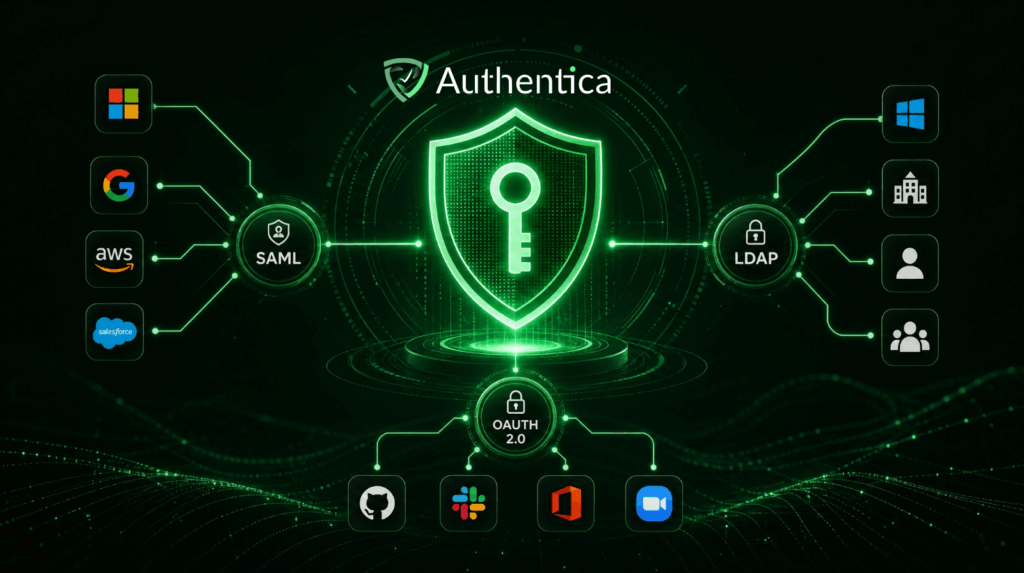
Single Sign-On (SSO) systems provide standardization and enhanced usability for users, and to do so seamlessly, they rely on a set of standardized SSO protocols that enable identity information to move securely between systems.
While the user experience of SSO appears simple, logging in once to access multiple applications with one click, the underlying process depends on structured communication between identity providers and the applications that trust them, which is often strictly handled to ensure the highest possible security.
These protocols define how authentication is performed, how identity is verified, and how permissions are granted across different services. For organizations evaluating SSO solutions, understanding these protocols is beneficial.
Security Assertion Markup Language (SAML)
Security Assertion Markup Language, commonly referred to as SAML, remains one of the most widely adopted protocols for SSO deployments. It was specifically designed to allow identity providers to securely communicate authentication information to service providers.
In this model, the identity provider verifies the user’s credentials and sends a signed authentication assertion confirming that the user has successfully authenticated.
The service provider then accepts this assertion and grants access to the application without requiring the user to log in again. This process enables users to authenticate once with a central identity provider and seamlessly access multiple enterprise systems without repeated login prompts.
One of the reasons SAML became so dominant in enterprise environments is its strong security model and its ability to integrate with centralized directory systems.
OAuth 2.0 is often associated with SSO environments, but its primary purpose is authorization rather than authentication. This influences the way this protocol works. Instead of verifying a user’s identity directly, OAuth allows applications to obtain permission to access specific resources on behalf of a user without exposing the user’s credentials.
When a user is granted a permission, the authorization server issues a token that allows an application to perform specific actions. These tokens are designed to be temporary and restricted in scope, which helps reduce the risks associated with credential sharing.
OAuth is widely used across web apps, with many platforms allowing users to connect their accounts to third-party services using OAuth-based authorization. This approach allows applications to access certain information without requiring the user to provide their password directly to the requesting service.
Lightweight Directory Access Protocol, or LDAP, is one of the older protocols used within SSO systems. Although it is older than many modern SSO standards, it continues to play an important role in enterprise identity infrastructures to date.
LDAP is primarily used for accessing and managing directory services, which store structured information about users, including credentials, group memberships, organizational roles and access privileges.
While newer authentication protocols such as SAML and OpenID Connect are typically used for application-level authentication, LDAP often serves as the underlying protocol for storing identity. Identity providers may authenticate users against an LDAP directory before issuing authentication assertions or tokens to external applications.
SSO systems depend on one or more layered protocols working together to manage authentication, authorization, and identity verification. Each protocol plays a distinct role within the broader identity ecosystem, and understanding these roles is beneficial for organizations designing or expanding their authentication environments.